🖋️ Pixel Art Uv Mapper
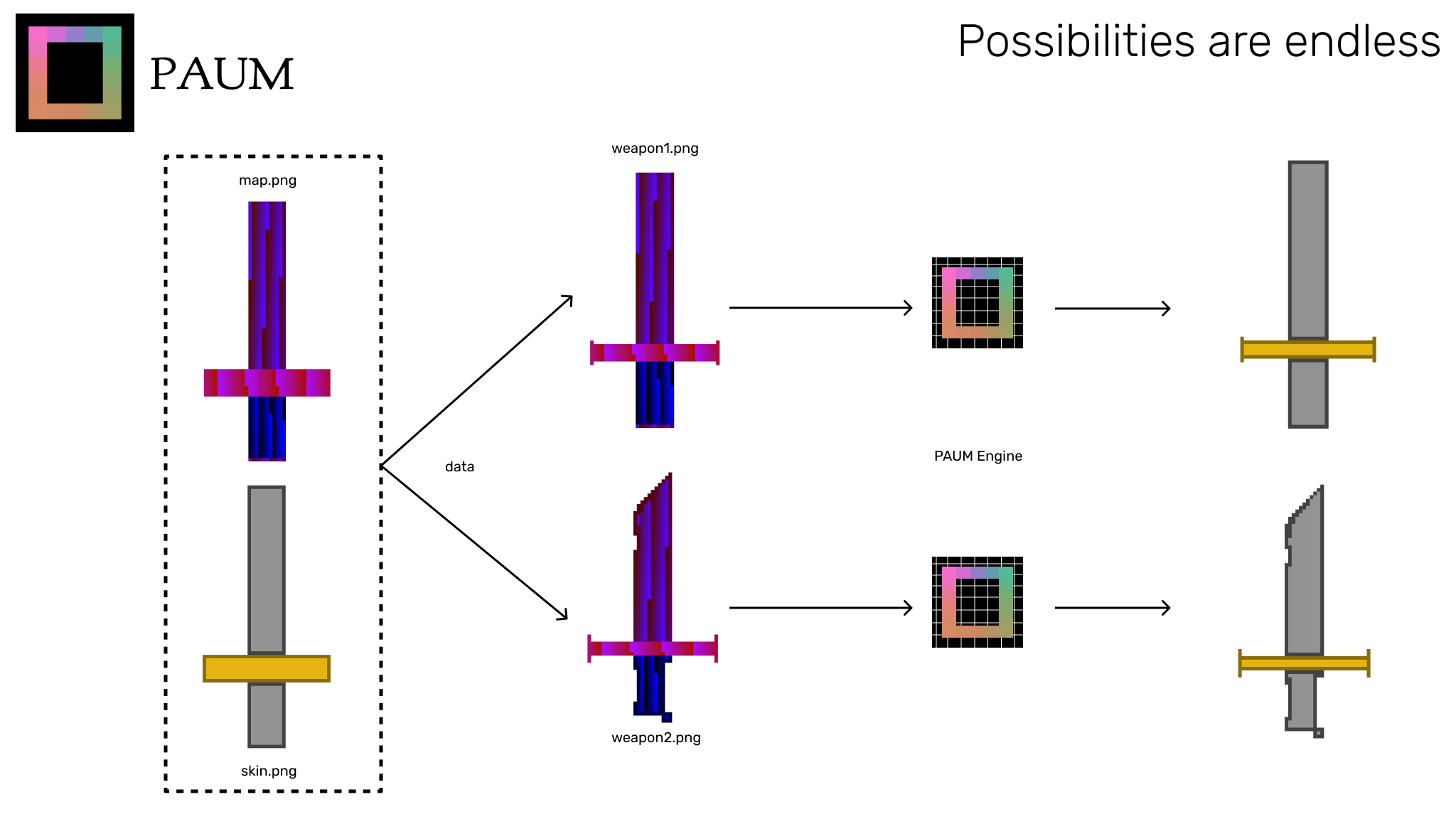
Unity Tool – Asset Store Published | Personal Utility Project What's PAUM ? It's basically a mapper which will map an input texture in according to a map and a skin texture you will provide. It's a powerful tool which can handle multiple layer to multiply combinations. You can change skin texture or input texture in real time. It'll boost your pixel art project by saving you time and expand possibilies to let your imagination becoming your only one limit.
🧠 Map-Based Texture Decoding Uses a Map Texture system where uniquely colored pixels define regions for mapping—ensuring accurate reuse and easy manipulation of sprite data.
🧩 Layer/Skin Texture System Supports Layer Textures that define how mapped regions should render, enabling retexturing, color shifts, and dynamic skinning.
🧱 Texture-to-Map Abstraction Separates sprite visual data (textures) from structural layout (mapping), perfect for character customization, equipment overlays, and skin systems.
🎛️ Multiple Mapping Workflows Offers a variety of options to map your textures:
- Shader-based (fastest, GPU-driven, low overhead)
- Sprite Component (UI-based, supports multi-layering)
- Animator Override Component (frame-based UV mapping)
- Compute Sprite Component (GPU-powered for large textures)
- Engine Class API (manual scripting control with fine-grained access)
🎮 Runtime Modifiability Both shader and component properties can be updated in real time—allowing for in-game evolution of sprites, dynamic skin swaps, or procedural generation.
🧪 Built-in Map Generator Easily generate Map Textures from existing sprites via a dedicated UI window, defining clean region data with unique colors.
🔁 Multi-Layer Support With components like
PAUMSprite, stack and blend multiple rendering layers for complex visual effects and animations.
Technical Stack:
- Unity C# Editor Scripting
- ScriptableObjects & Mesh API
- Custom Inspector UI
- GLSL Shaders for texture analysis and feature detection
- GPU computation using
ComputeShaderand GPU-based pixel parsing - Unity Asset Database & Serialization
Impact: Now available on the Unity Asset Store and used by indie developers, Pixel Art UV Mapper enhances both performance and workflow simplicity. It’s particularly well-suited for procedurally generated content, and resource-constrained platforms.
| ||
| E: [email protected]
| |